
POLICE CAN SEARCH YOU WITHOUT EVER TOUCHING YOU IN OUR ERA OF MASS SURVIELLANCE

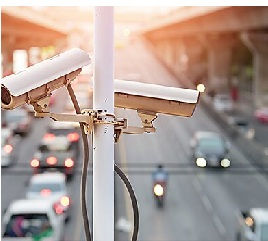
There was of course no way of knowing whether you were being watched at any given moment.
- George Orwell, 1984
The Fourth Amendment guarantees ''[t]he right of the people to be secure in their persons, houses, papers, and effects, against unreasonable searches and seizures.'' This guarantee is critical to the right of people to be free. “Uncontrolled search and seizure is one of the first and most effective weapons in the arsenal of every arbitrary government” Brinegar v. United States, 338 U.S. 160, 180 (1949) (Jackson, J., dissenting). This is not an antiquated notion from 250 years ago. Protection against police search and seizure afforded by the Fourth Amendment “is not an outworn bit of Eighteenth Century romantic rationalism but an indispensable need for a democratic society.” Harris v. United States, 331 U.S. 145, 161 (1947) (Frankfurter, J., dissenting).
''When the Fourth Amendment was adopted, as now, to 'search' meant '[t]o look over or through for the purpose of finding something; to explore, to examine by inspection; as to search the house for a book; to search the wood for a thief.' ' Kyllo v. United States, 533 U.S. 27, 32 n.1, 121 S. Ct. 2038 (2001) (quoting N. Webster, An American Dictionary of the English Language 66 (1828). In other words, when considering whether a “search” has occurred is a question of whether a person’s privacy right has been infringed by the government. Kyllo, at 33. See also, Soldal v. Cook County, 506 U.S. 56, 63, 113 S. Ct. 538 (1992); United States v. Karo, 468 U.S. 705, 712, 104 S. Ct. 3296 (1984).
Importantly, the Fourth Amendment guarantee against an unreasonable search is not limited to a ''constitutionally protected area'' since “the Fourth Amendment protects people, not places.'' Katz v. United States, 389 U.S. 347, 351, 88 S. Ct. 507 (1967). However, the Court went on to say that : ''What a person knowingly exposes to the public, even in his own home or office, is not a subject of Fourth Amendment protection. But what he seeks to preserve as private, even in an area accessible to the public, may be constitutionally protected.'' Id. The Court then concluded that the government's activities in electronically listening to and recording Katz's words constituted a ''search and seizure'' within the meaning of the Fourth Amendment because the agents had ''violated the privacy upon which he justifiably relied.'' Id. at 353.
With the advent of electronic technology, the Fourth amendment has increased significance. This is because modern life calls for greater Fourth Amendment protection from government intrusions. Goldman v. United States, 316 U.S. 129, 137–39 (1942) (Murphy, J., dissenting). Electronic technology has advanced considerably since Katz. Electronic technology now gives police the ability to secretly conduct surveillance with little or no oversight.
For instance, police commonly use automatic license plate readers (ALPRs). ALPRs automatically and indiscriminately scan and record the license plate number and the time, date and precise location of every passing vehicle, along with an image of the vehicle and its immediate surroundings. With algorithms applied to the data collected by the ALPR, the systems reveal regular travel patterns and predict where a driver may be in the future. Street-Level Surveillance: Automated License Plate Readers (ALPRs), (ELECTRONIC FRONTIER FOUNDATION, https://sls.eff.org/technologies/automated-license-plate-readers-alprs . These recordings are made of all vehicles, regardless of any alleged connection to the offense. Cars registered in Wisconsin must display front and rear license plates or face a forfeiture. Wis. Stat. 341.15. This means automatic license plate readers are used to track and record the movements of millions of ordinary people, even though the overwhelming majority are not connected to a crime.
Seven days a week, twenty-four hours a day surveillance of any person is made possible, without judicial knowledge or supervision. These recordings of all people by ALPRs are done without any reasonable suspicion or probable cause that an individual driver had or was about to commit a crime. Fixed ALPRs have a continuous connection to the ALPR server and are never turned off. Every license plate that comes into view is scanned. One ALPR vendor claims its dataset includes over 5 billion scans and is growing at a rate of 120 million data points a month. Kaveh Waddell, How License-Plate Readers Have Helped Police and Lenders Target the Poor, The Atlantic (Apr. 22, 2016), https://www.theatlantic.com/technology/archive/2016/04/how-license-plate-readers-have-helped-police-and-lenders-target-the-poor/479436/ This recording is truly a “dragnet type law enforcement practice” which the U.S. Supreme Court has refused to directly review in earlier cases. U.S. v. Knotts, 460 U.S. 276, 283-84 (1983).
Automated license plate readers (ALPRs)[1] are high-speed, computer-controlled camera systems that are typically mounted on street poles, streetlights, highway overpasses, mobile trailers, or attached to police squad cars. The cameras can be concealed so that passing drivers do not know that their vehicles are being scanned. Leonardo, Conceal Your System Components With ELSAG Custom Solutions (2019). https://www.leonardocompany-us.com/lpr/alpr-products/custom-solutions.
What distinguishes ALPR cameras from other high-speed cameras is their ability to read the alphanumeric characters on license plates using optical character recognition:
[1] The operation of automatic license plate reader (ALPR) and Flock cameras are from the following sources: https://www.policemag.com/technology/article/15346753/lpr-technology, https://www.motorolasolutions.com/en_us/video-security-access-control/license-plate-recognition-camera-systems/l5f-fixed-lpr-camera-story.html, https://www.flocksafety.com/why-flock, https://www.lumana.ai/?utm_source=google&utm_medium=cpc&utm_campaign=launch-comp-tier-2&utm_content=flock&utm_term=flock%20safety&gad_source=1&gclid=CjwKCAjwlbu2BhA3EiwA3yXyu8F9PvOtwMA81Zu3-aWg2gO0D7FC1XbBZ_25lzCOgcReuobRBa4vvhoCl-QQAvD_BwE, https://www.fox6now.com/news/wisconsin-ai-powered-flock-cameras, and https://atlasofsurveillance.org/a/aos011792-west-allis-police-department-automated-license-plate-readers; and
Most of the existing solutions for the ALPR task have considered the multi-stage method, which consists of three main steps. The first stage is the license plate detection or extraction. Existing algorithms use traditional computer vision techniques and deep learning methods with object detection to locate the license plate in an image. Traditional computer vision techniques are mainly based on the features of the license plate such as shape, color, symmetry, texture, etc. In the second stage, the license plate is segmented and the characters are extracted using some common techniques such as mathematical morphology, connected components, relaxation labelling, and vertical and horizontal projection. However, the character segmentation stage is not necessarily performed in every multi-stage ALPR system, because there are some segmentation-free algorithms in which this stage is omitted.
The final stage is the recognition of the characters using pattern matching techniques or classifiers like neural networks and fuzzy classifiers. However, the main downside of separating detection from recognition is its impact on the accuracy and efficiency of the overall recognition process. This happens mainly due to the imperfection of the detection process such as flaws in the bounding box prediction. For instance, if the detection process misses a part of a license plate, it will affect to reduce the overall accuracy of the recognition process. Thus, in a multi-stage approach, it is important to achieve satisfying results in each stage. Automated License Plate Recognition: A Survey on Methods and Techniques, (IEEE Access, 9, 11203-11225), https://ieeexplore.ieee.org/abstract/document/9310202 Footnotes omitted.
In his concurring opinion in Katz, Justice Harlan warned that any decision to construe the Fourth Amendment as proscribing only physical intrusions by police onto private property "is, in the present day, bad physics as well as bad law, for reasonable expectations of privacy may be defeated by electronic as well as physical invasion." Id., at 362. Emphasis added. Justice Harlan's opinion did not so much abandon the doctrine of constitutionally protected areas as update it to take account of new technologies for electronic surveillance. David A. Sklansky, Back to the Future: Kyllo, Katz, and Common Law, 72 MISS. L.J. 143, 158 (2002). Justice Harlan not only tried to modernize the doctrine of constitutionally protected zones, he succeeded-to such an extent that people, even in a public place, have an expectation of privacy. Id.at 158.
Clearly the U.S. Supreme Court has indicated that courts must reject any “mechanical interpretation of the Fourth Amendment” since doing so would leave citizens at the “mercy of advancing technology.” Kyllo v. United States, 533 U.S. 27, 35 (2001) For instance, the Supreme Court has refused to extend the third party exception to the privacy of historical cell site location since people have a reasonable expectation of privacy in their movement. Carpenter v. United States, 585 US 296 (2018). See, Thomas K. Clancy, What is a ''Search'' within the Meaning of the Fourth Amendment? 70 Alb. L. Rev. 1, 54 (2006) (The Fourth Amendment ''should be applied to any intrusion with the purpose of obtaining physical evidence or information, either by a technological device or the use of the senses, into a protected interest.'')
If you believe the police have unlawfully invaded your privacy and you are being prosecuted for a crime based on this invasion, contact attorney Paul Ksicinski 414-530-5214


Comments