
AGE VERIFICATION IS CENSORSHIP AND INVADES PRIVACY

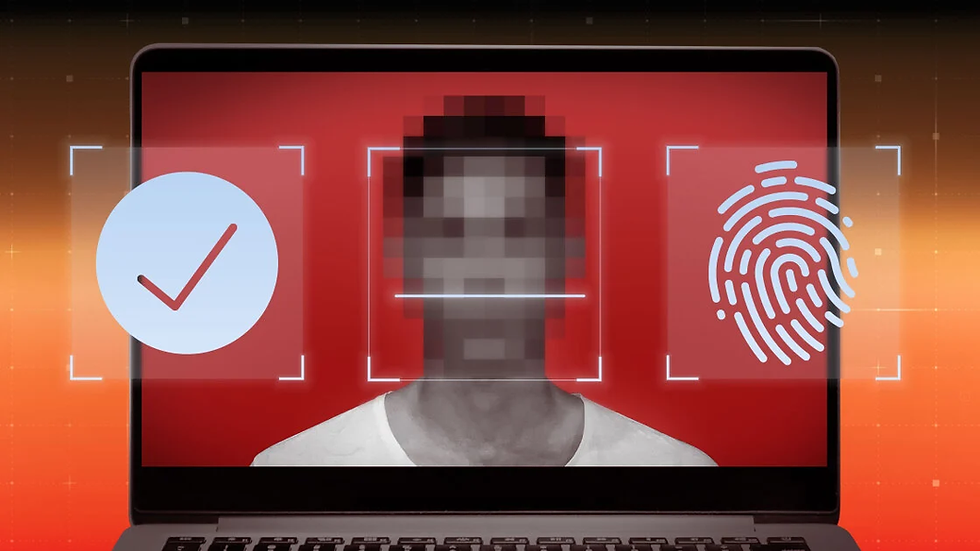
Photo from PC Magazine
Age verification mandates’ potential to infringe on individuals’ privacy and free expression has fueled criticism and litigation in the United States. Previously, the U.S. Supreme Court found online age verification laws to infringe upon First Amendment rights. In the recent Free Speech Coalition v. Paxton, 606 U.S. ___ (2025) case, however, the court departed from precedent with a six-three decision to uphold Texas H.B. 1181, which mandates age verification for access to sexual content online.
In Paxton, the Supreme Court ruled that Texas' age-verification law passed intermediate scrutiny and only incidentally burdened the protected speech of adults. The Paxton majority found that states do not need to implement the least restrictive or most effective means of achieving the government interest. This means that in an effort to protect youth from obscene content, states like Texas do not need to consider whether the law impacts adults in addition to minors nor whether age verification is the most effective method of preventing minors from accessing adult content.
Previously, the Supreme Court applied strict scrutiny when laws restricted adult access to speech that was only obscene for minors. The Supreme Court ruled in Reno v. American Civil Liberties Union 521 US 844 (1997) that the bulk of the Communications Decency Act (CDA) was unconstitutional. The CDA would have made it illegal to knowingly send obscene material to minors. In contrast to Ginsberg v. New York, 390 U.S. 629 (1968), the court applied strict scrutiny to laws that attempted to restrict free speech on the Internet, and that the CDA placed an "unacceptably heavy burden on protected speech."
We were warned that Paxton decision may happen. In Ginsberg, Justice Douglas wrote a dissent where he strongly objected to the majority's decision. He found the First Amendment to be an absolute that harbored no exclusion for the obscenity that the rest of the court had found. While he admitted that the material that had been sold to minors could be harmful, Justice Douglas was concerned that the ruling would set a precedent that could be perpetuated to "protect" other segments of society from anything the government might deem obscene. He finished by saying the definition of obscenity is impossible to determine because it is highly subjective and laments that the court is forced to sit as the nation's board of censors.
The Electronic Frontier Foundation (EFF) has found that age verification is harmful in at least three ways. Age Verification Won’t “Protect the Children,” https://www.eff.org/pages/age-verification-wont-protect-children First, age verification invades privacy by requiring users to hand over their real names, real faces, real proof of their real life identities—and in some cases, their parents’ identities too—just to use basic online services. Once this information is shared, users cannot unshare it. This process opens up people’s personal, identifiable information and online activity to risks, including retention, sale, theft, exposure, and surveillance.
Second, age verification stifles communication over the electronic backyard fence. The First Amendment values the free interchange of ideas for all citizens, regardless of age. “[The idea that the government may restrict] …. speech expressing ideas that offend strikes at the heart of the First Amendment. Speech that demeans on the basis of race, ethnicity, gender, religion, age, disability, or any other similar ground is hateful; but the proudest boast of our free speech jurisprudence is that we protect the freedom to express "the thought that we hate." United States v. Schwimmer, 279 U.S. 644, 655, 49 S.Ct. 448, 73 L.Ed. 889 (1929) (Holmes, J., dissenting).” Matal v. Tam, 582 U.S. ___, 137 S.Ct. 1744, 1764 (2017). Clearly the First Amendment protects not only informed speech, but speech which is spoken “foolishly and without moderation.” Baumgartner v. United States, 322 U.S. 665, 673-674 (1944).
As one young person expressed: “I'm young and I'm not smart but I know without social media, myself and plenty of the people I hold dear in person and online would not be alive. We wouldn't have news of the atrocities happening overseas that the news doesn't report on, we wouldn't have mentors to help teach us.” Thousands of Young People Told Us Why the Kids Online Safety Act Will Be Harmful to Minors, https://www.eff.org/deeplinks/2024/03/thousands-young-people-told-us-why-kids-online-safety-act-will-be-harmful-minors#news. As EFF explains “Blocking our youth from these diverse spaces robs them of opportunities to develop as individuals and participate in public life, and to find safety in supportive online communities that they can’t always access in the physical world.” Age Verification Won’t “Protect the Children,” https://www.eff.org/pages/age-verification-wont-protect-children
Third, cutting internet media access to minors is actually harmful to them. Thousands of Young People Told Us Why the Kids Online Safety Act Will Be Harmful to Minors, https://www.eff.org/deeplinks/2024/03/thousands-young-people-told-us-why-kids-online-safety-act-will-be-harmful-minors#news As one young person expressed:
I, and many of my friends, grew up in an Internet where remaining anonymous was common sense, and where revealing your identity was foolish and dangerous, something only to be done sparingly, with a trusted ally at your side, meeting at a common, crowded public space like a convention or a college cafeteria. This bill spits in the face of these very practical instincts, forces you to dox yourself, and if you don’t want to be outed, you must be forced to withdraw from your communities.
Another young person simply stated, “Social media helped me escape a very traumatic childhood and helped me connect with others. quite frankly, it saved me from being brainwashed.”


Comments